RTI Round Table
Different Subjects. One Bigger Conversation.
A Recovery-Informed Round Table
Join the Recovery Training Institute (RTI) for a virtual Round Table exploring how recovery-informed practices intersect across different professions, services, and communities.
Think about the first five minutes of walking into an unfamiliar space.
Before anyone has spoken to us, we're already assessing our surroundings. Do we feel safe or unsafe? What is happening in our brains that allows us to make those assessments so quickly? How might our past experiences influence what we notice and how we respond?
There's a sign on the door that says "Everyone Is Welcome." But what if the space itself tells us otherwise? What if the environment, the expectations, or the way people interact make it impossible for some people to fully participate?
And what happens to our dignity in those moments? Can we be welcomed into a space and still leave feeling diminished, judged, or less than? What does dignity mean beyond simply preventing trauma or treating people respectfully?
One moment. Four different perspectives. And an entirely different way of thinking about care.
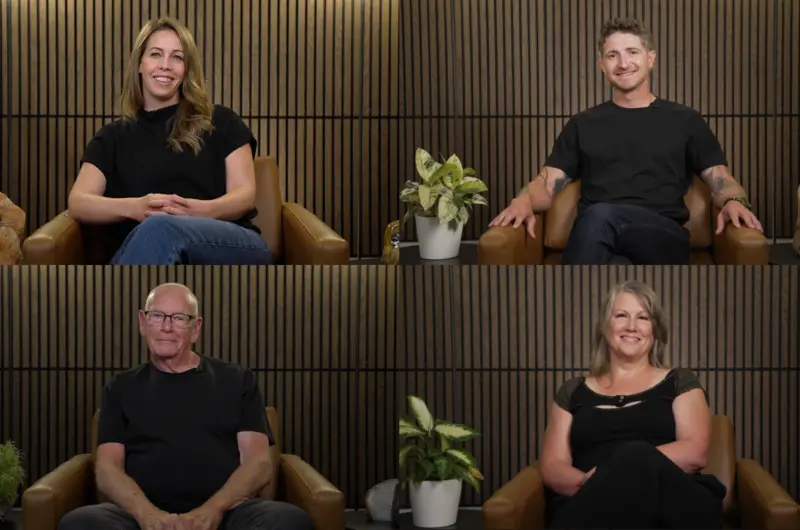
Moderated by RTI Executive Director Brian Hamel, this Round Table brings together Lisa Main, Liam Sorrenti, Tanya Salwach-Hoffert, and Rand Teed to explore how their knowledge and experiences connect, challenge our assumptions, and change the way we understand and support people.
Meet Our Panelists
Lisa Main: Dignity, Indigenous-led recovery services, cultural safety, and why dignity asks more of us than trauma-informed care alone.
Liam Sorrenti: Early childhood trauma, attachment, and how our experiences shape our sense of safety, connection, and trust.
Tanya Salwach-Hoffert: Disability, accessibility, and how a space that claims to welcome everyone can still exclude the people it was intended to include.
Rand Teed: Mindfulness, addiction, recovery, and how awareness of our internal responses can change the way we interact with others.
What to Expect
This Round Table is designed to encourage meaningful discussion, shared learning, and the exchange of ideas across disciplines.
Through a moderated conversation, we'll explore how different perspectives can help us understand the same human experience in entirely different ways, what we may be missing when we approach care through only one lens, and what we can do differently as a result.
Whether you work in recovery services, healthcare, education, disability support, organizational leadership, or another helping profession, this conversation offers an opportunity to rethink how we create environments, build relationships, and respond to the people we support.

A video is being shown