Recovery-Informed Training examines what professionals, organizations and communities can learn from the process of recovery. It takes what recovery teaches us about behaviour, connection, environment, power, safety, belonging, accountability and change and asks a practical question:
What should we do differently because we know this?
Being Recovery-Informed is not about claiming to be the expert on recovery. It is not about following whatever idea, language, or approach happens to be getting the most attention right now.
It is about practical application.

There is no shortage of information about human behaviour, leadership, safety, or wellness. The harder question is what happens when that information has to be used. The situations that test us rarely arrive as clean examples from a workbook.
At the Recovery Training Institute, we focus on the distance between understanding an idea and applying it in real life. That means looking at difficult conversations, uncertain decisions, competing responsibilities, and the moments where ideas have to hold up in practice.
We want learning to affect what someone notices, how they make sense of what is happening, and what they choose to do next.
Knowing more is not the same as doing differently.
Recovery has taught us important things about what helps people grow, participate, build relationships, find stability, take risks, experience joy, and create lives that feel meaningful to them.
Those lessons are not limited to addiction treatment or any single helping profession. They can inform the way we lead teams, design services, create communities, respond to uncertainty, approach accountability, and think about accessibility. Each course gives us another place to examine what shapes people’s experiences and what we can learn from them.
That is why RTI reaches across disciplines. We are interested in what one field can teach another and what becomes possible when useful knowledge is allowed to travel.

When something is not working inside an organization, it is easy to focus entirely on the individual involved. Sometimes that is appropriate. Sometimes the more useful questions are about what is happening around them.
Culture, hierarchy, communication, expectations, workplace norms, relationships, and access to support all influence behaviour. Policies may point in one direction while the situation in front of us is more complicated to navigate. A leader may need to act without having all of the information. Something designed to help may be creating an unintended barrier.
Our organizational training is built for those moments.
Rather than giving people more scripts to memorize, we create opportunities to examine how decisions are made, where uncertainty exists, where different roles are working from different assumptions, and how to navigate the human conversations where those differences have to be worked through.
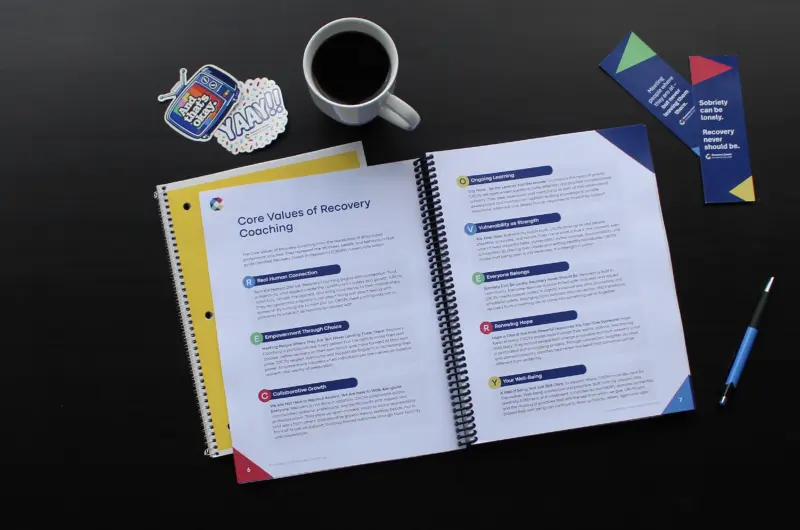
Recovery-Informed Training is how Recovery Coach Academy Canada delivers Recovery Coaching education. Practical application is built into the way the training is facilitated. It is immersive, intensive, and human.
Learners have real conversations, engage in live coaching, reflect on their practice, receive direct feedback, develop decision-making in real time through authentic training opportunities, and learn how to walk alongside someone through participant-centered support.
The learning pathway begins with Foundations of Recovery Coaching and continues through Ethical Considerations in Recovery Coaching, Professionalism in Recovery Coaching, the Advanced Coaching Development Program, and the designation panel process leading to the Certified Recovery Coach Professional (CRCP) designation.

The RTI Resource Library brings together interviews, conversations, webinars, practical tools, and perspectives from people working across different sectors and communities.
Organizations we’ve supported through education and training to advance recovery-oriented care across Canada.
Partner logos carousel